
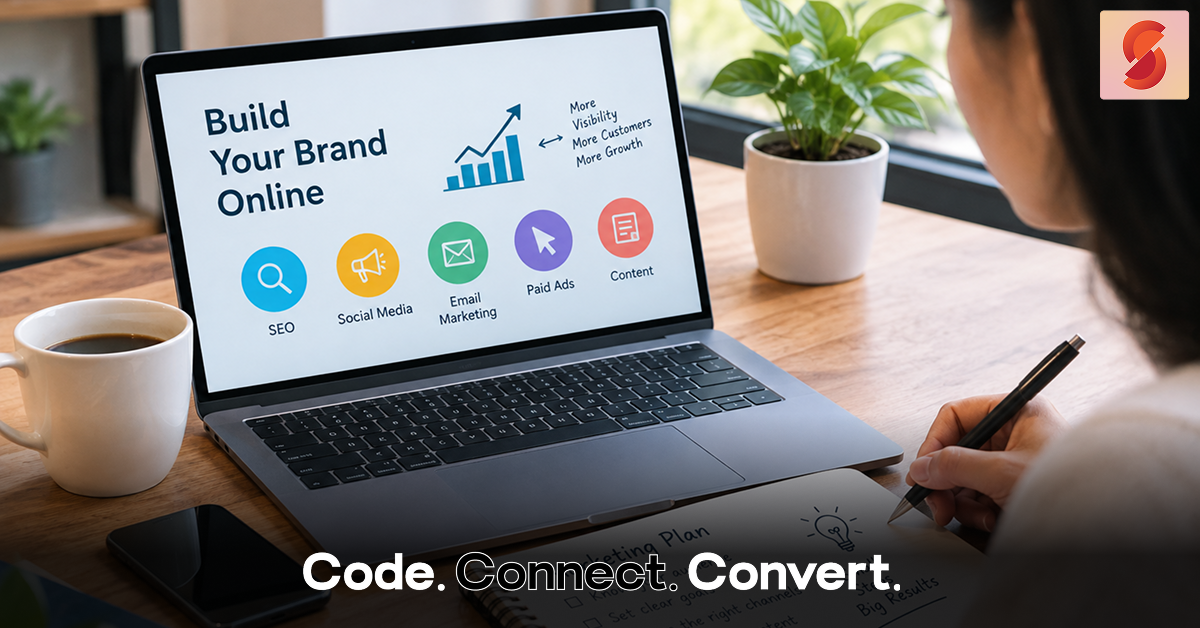
Most small businesses don’t have a digital marketing problem. They have a focus problem. One month it’s TikTok. The next it’s Google Ads. Then someone mentions email, or SEO, or influencer marketing, and the cycle starts again. Budgets get spread thin, nothing gets time to compound, and results stay flat.
A real digital marketing strategy for small businesses isn’t about doing more. It’s about doing the right two or three things well enough to actually move the needle.
This guide breaks down a practical framework, the kind that works whether you’re running a café in Melbourne, a boutique agency in Dubai, or a home services business in London.
What Is a Digital Marketing Strategy for Small Businesses?
A digital marketing strategy is the plan that connects your business goals to the channels, content, and campaigns you’ll use to reach them. It answers three questions: who are we trying to reach, what will convince them to buy, and where will we invest to make that happen?
Notice what’s not in that definition: a channel list. “We’ll do SEO, social, email, and PPC” isn’t a strategy, it’s a to-do list. Digital marketing for small businesses works when strategy comes first and tactics follow, not the other way round.
Why Small Businesses Need a Strategy, Not Just Channels
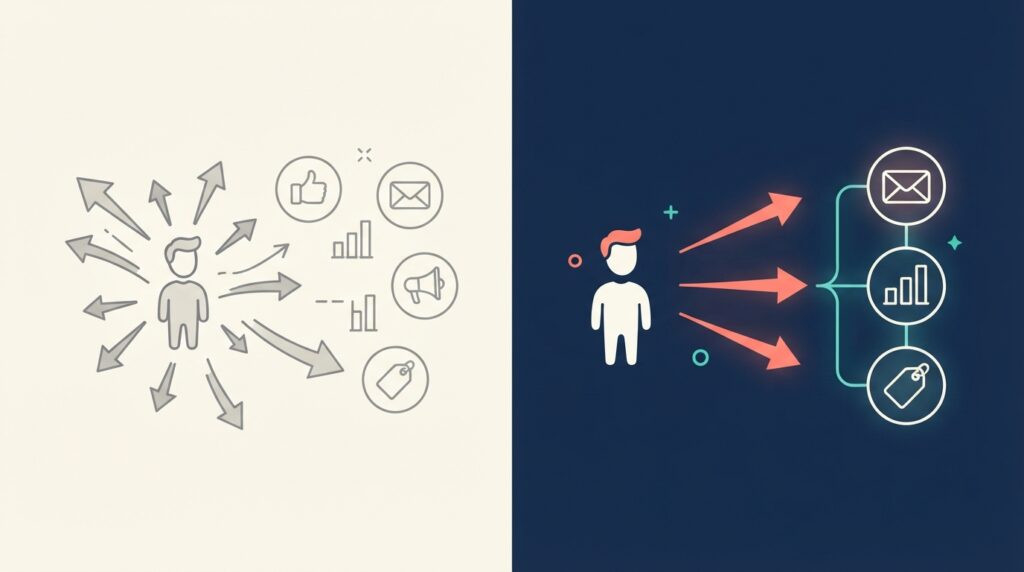
The biggest cost of running online marketing for small businesses without a strategy isn’t wasted spend, it’s wasted time. Every month spent testing a channel that was never right for your audience is a month your competitors are compounding on the ones they picked correctly.
Paid ads stop working the day you stop paying. Content and SEO compound for years. Email retains customers for cents on the dollar. A strategy tells you which of these deserves the majority of your budget this year, based on where you are, not where a Salesforce blog says you should be.
The 7-Part Digital Marketing Strategy Framework
1. Define One Commercial Goal, Not Five
“Increase brand awareness, generate leads, grow social following, launch a new product, and expand to a new city” isn’t a strategy. It’s a wishlist.
Pick one commercial goal for the next 6–12 months. More qualified leads. Higher average order value. Lower customer acquisition cost. Everything downstream, channels, content, budget, flows from this one choice.
2. Know Your Customer (Beyond Demographics)
Age and location tell you almost nothing about buying behaviour. What matters is intent: what problem is your customer trying to solve, what have they already tried, and what would make them choose you over the next option?
Build one detailed ideal customer profile (ICP), map the questions they ask before buying, and use that map to guide every piece of content and every ad you run. Digital marketing for local business especially depends on this, a plumber in Sydney and a plumber in Manchester serve very different customer contexts.
3. Audit What You Already Have
Before adding anything, look at what’s already working. Which pages drive the most traffic? Which product or service page converts best? Which social platform actually generates enquiries versus vanity likes?
Most small businesses discover 20% of their existing assets are producing 80% of their results, and they’ve been ignoring both. Fix the underperformers on high-traffic pages before spending on new campaigns.
4. Pick 2–3 Channels, Not All of Them
The channels that work depend on your goal, your customer, and your capacity. A B2B consultancy usually wins on LinkedIn + SEO + email. A local service business often wins on Google Business Profile + local SEO + Google Ads, and if that’s your model, our guide to local SEO for small business breaks the playbook down step by step. An e-commerce brand typically wins on Meta Ads + email + organic social.
Pick two or three. Commit for at least 6 months. Reassess based on data, not on what’s trending on LinkedIn this week.
5. Build a Content Engine (SEO + AI Search)
Content is the connective tissue of digital marketing. Blog posts, service pages, and landing pages built around real search intent bring in leads for years, but only if they’re built on proper keyword research, technical SEO fundamentals, and genuine expertise on the topic.
In 2026, “content” also means being discoverable in AI-driven answers. Google’s AI Overviews, ChatGPT, and Perplexity all pull from the same underlying signals as traditional search: well-structured content, authoritative citations, and clear topical relevance. If your SEO foundation is strong, AI search visibility follows.
This is exactly how we approached SEO for Low Cost Vibes, a UK travel brand: mapping keywords to real booking intent, building destination-focused landing pages, and connecting informational blogs to conversion pages. The result was a 48.6% lift in organic traffic and a 170.6% year-on-year increase in top keyword visibility.
6. Layer in Paid Where It Accelerates Organic
Paid ads shouldn’t replace organic, they should amplify what’s already working. Boost the blog post already ranking on page 2. Retarget visitors who read your pricing page. Run Google Ads on the transactional keywords your SEO hasn’t cracked yet.
According to the U.S. Small Business Administration, small businesses typically invest 7–8% of gross revenue in marketing. For most, that budget stretches furthest when paid spend supports organic assets rather than trying to carry the whole strategy alone.
When we restructured the Google Ads strategy for World Pinoy Flights, for example, cost per lead dropped from £10–£15 to £5–£7 within 30–45 days, a 50%+ reduction by aligning campaigns with high-intent search queries rather than broad prospecting.
7. Measure What Actually Moves Revenue
Impressions, followers, and traffic are inputs. Enquiries, bookings, and revenue are outcomes. A good measurement setup tracks both, but reports on outcomes.
Set up Google Analytics 4 properly, connect your CRM, define what a “qualified lead” actually looks like, and review the numbers monthly. Running a digital marketing business on assumptions is the fastest way to burn budget. Small businesses that measure honestly typically kill 30–40% of their marketing activity within the first quarter and reinvest that budget into what’s proven to work.
How Much Should a Small Business Spend on Digital Marketing?
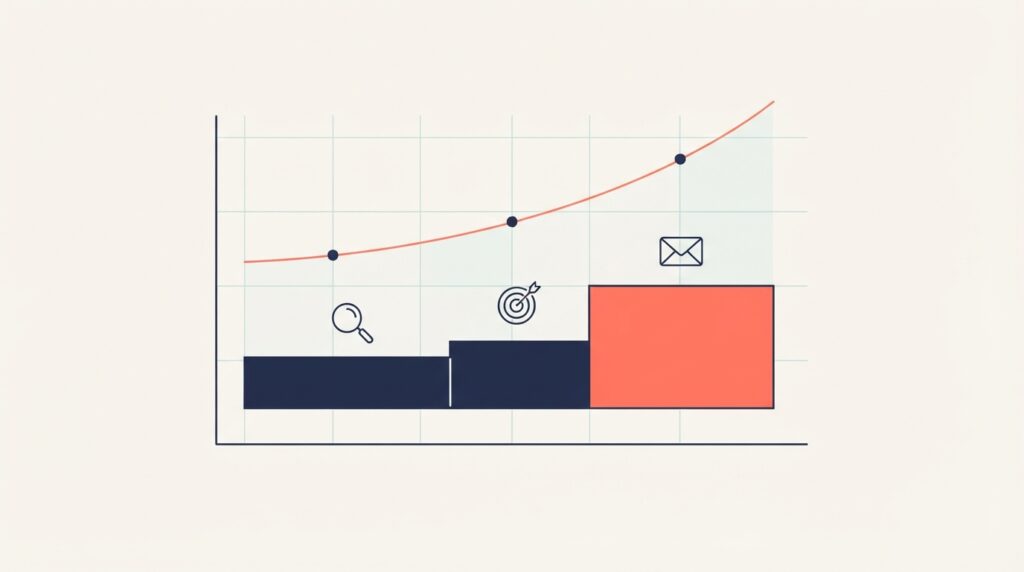
Most small businesses spend between 7–12% of gross revenue on marketing, with a larger share going to digital as offline channels decline. Newer businesses trying to build market share often invest more; established businesses maintaining position often invest less.
The right budget isn’t a percentage, it’s whatever keeps your customer acquisition cost profitable and your pipeline full. Digital marketing packages for small businesses typically start from a few hundred dollars a month for essentials and scale into the low thousands for multi-channel programmes.
Where Scripterlab Fits In
We run digital marketing for multi-brand travel groups including World Pinoy Flights, Low Cost Vibes, World Flight Vibes, and World Holiday Vibes, combining SEO, paid media, content marketing, and social across markets in the UK, Middle East, and Southeast Asia.
If you’re a small business ready to stop chasing tactics and start building a strategy that compounds, book a free consultation with Scripterlab, we’ll audit where you are, show you where the leverage is, and map the next 6 months. Explore our digital marketing services, SEO, and paid media pages to see what we cover.
Frequently Asked Questions
How much does digital marketing cost for a small business per month?
Most small businesses invest between $500 and $5,000 per month on digital marketing, depending on channels, competition, and goals. Essentials-only programmes sit at the lower end; multi-channel strategies with paid ads scale into the thousands.
Which digital marketing channel gives the fastest ROI for small businesses?
Paid search (Google Ads) usually delivers the fastest measurable ROI because you can capture buyers at the exact moment they’re searching. SEO and content take longer to compound but deliver far cheaper leads long-term.
Can a small business handle digital marketing in-house, or should we hire an agency?
Basics like social posting, email, and Google Business Profile updates are doable in-house. Digital marketing agencies for small business add real value in strategy, SEO, paid media, and analytics, where mistakes are expensive and expertise compounds.
How long before a digital marketing strategy shows results?
Paid ads produce results in weeks. SEO and content marketing typically take 3–6 months for early signals and 6–12 months for meaningful ROI. Anyone promising instant SEO results is overselling.
What’s the biggest digital marketing mistake small businesses make?
Trying to be everywhere. Spreading a small budget across five channels almost always underperforms concentrating it on two done properly.
Do small businesses still need social media in 2026?
Only if your customers are actually on it and buying because of it. For B2C brands, yes, usually Instagram or TikTok. For most B2B or local service businesses, LinkedIn or Google Business Profile activity delivers more than daily social posts.