

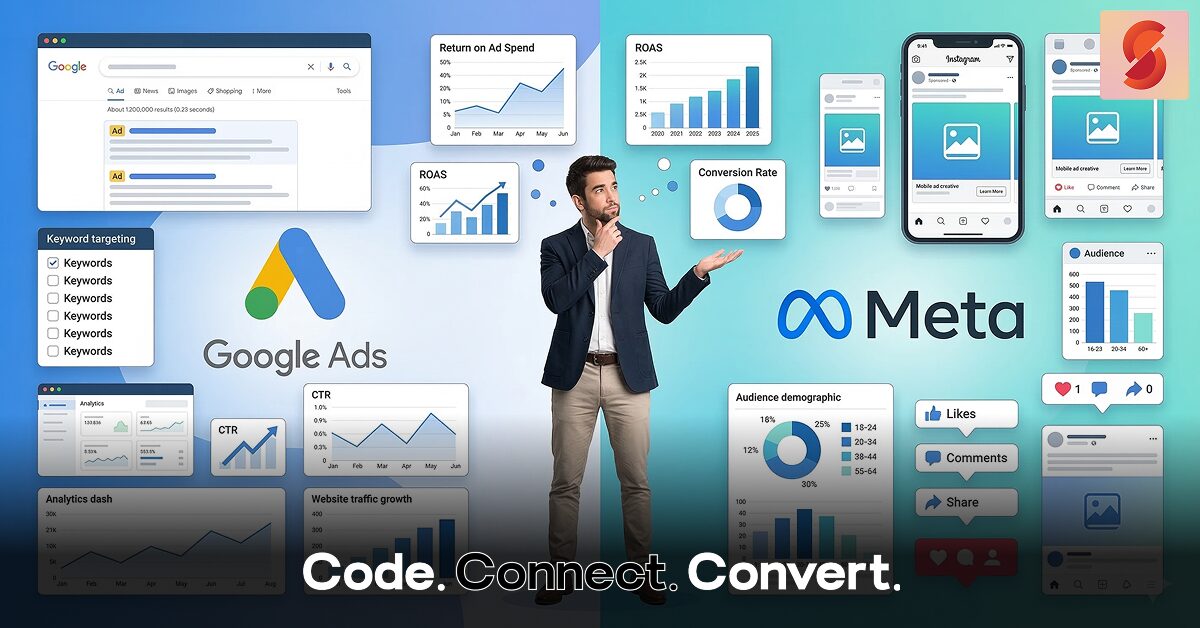
In today’s digital marketing landscape, businesses rely heavily on paid advertising to reach their target audience, generate leads, and drive sales. Two of the most powerful advertising platforms available are Google Ads and Meta Ads. When comparing Google Ads vs Meta Ads, many marketers and business owners wonder which platform delivers better results.
Both platforms are effective but serve different purposes within the marketing funnel. Understanding the differences between Google Ads vs. Facebook Ads can help businesses choose the right strategy and maximise their advertising budget.
What Are Google Ads and Meta Ads?
Before comparing Meta Ads vs Google Ads, it’s important to understand how each platform works.
Google Ads is Google’s advertising platform that allows businesses to place ads across Google Search, YouTube, Gmail, and the Google Display Network. These ads appear when users actively search for specific keywords, making them highly effective for capturing high-intent traffic.
Meta Ads, on the other hand, run across Meta-owned platforms like Facebook, Instagram, and Messenger. Instead of targeting search queries, Meta Ads use audience-based targeting based on user interests, demographics, and behaviours.
In simple terms:
- Google Ads captures demand
- Meta Ads creates demand
Both approaches are valuable for businesses depending on their marketing goals.
Google Ads vs Meta Ads: Key Differences
The biggest difference between Google Ads vs Meta Ads is user intent.
With Google Ads, users are actively searching for a product, service, or solution. For example, someone searching for “digital marketing agency” already has an interest in finding a service provider.
Meta Ads work differently. Users see ads while scrolling through their social media feeds, even if they weren’t initially looking for a specific product or service.
As a result, Google Ads vs Facebook Ads often serve different stages of the marketing funnel. Google Ads works best for capturing ready-to-buy customers, while Meta Ads help build awareness and interest.
Targeting Capabilities
Targeting is another important factor when comparing Meta Ads vs Google Ads.
Google Ads Targeting

Google Ads mainly uses keyword targeting, allowing businesses to show ads when users search for relevant terms. Other targeting options include location targeting, remarketing, and audience signals.
Businesses that want to improve their paid search performance often rely on professional pay-per-click (PPC) services to optimse campaigns, manage bids, and improve conversion rates.
Meta Ads Targeting

Meta Ads focus more on audience targeting. Advertisers can reach users based on interests, behaviours, demographics, and past interactions.
This makes Meta Ads ideal for businesses looking to introduce their brand to new audiences. Many brands combine Meta Ads with strong social media marketing strategies to build engagement and brand awareness.
Ad Formats and Creative
When comparing Google Ads vs Facebook Ads, ad formats also differ significantly.
| Feature | Google Ads | Meta Ads |
|---|---|---|
| Ad Formats | Search, Display, Shopping, YouTube | Image, Video, Carousel, Stories, Reels |
| Creative Needs | Moderate | High (visual storytelling) |
| Best Funnel Stage | BOFU (ready-to-convert) | TOFU/MOFU (awareness & engagement) |
Google Ads relies on search intent, whereas Meta Ads depends heavily on eye-catching visuals and engaging content.
Cost and ROI
| Metric | Google Ads | Meta Ads |
|---|---|---|
| CPC Trend | Higher, competitive | Lower, budget-friendly |
| Conversion Speed | Fast | Slower, requires nurturing |
| Customer Lifetime Value | Moderate | High with long-term engagement |
| Assisted Conversions | Moderate | Excellent for nurturing leads |
Google Ads often delivers faster conversions, while Meta Ads are great for awareness and nurturing leads over time.
When Should You Use Google Ads?
Google Ads works best for businesses that want to capture existing demand and generate quick conversions.
It is particularly effective for:
- Local service businesses
- B2B companies
- E-commerce stores
- High-demand services
If your audience is actively searching for your product or service, Google Ads can deliver highly qualified leads.
When Should You Use Meta Ads?
Meta Ads are ideal for businesses focusing on brand awareness and audience engagement.
They work especially well for:
- E-commerce brands
- Lifestyle and fashion businesses
- Startups launching new products
- Brands focused on visual storytelling
Meta Ads help businesses introduce their brand to potential customers and build long-term relationships.
Final Thoughts
There is no universal solution for evaluating Google Ads vs Meta Ads. Both platforms offer unique advantages depending on your marketing objectives.
- Google Ads is powerful for capturing high-intent traffic and driving conversions.
- Meta Ads are excellent for building brand awareness and reaching new audiences.
For many businesses, the most effective strategy is combining both platforms. Meta Ads help generate interest and engagement, while Google Ads captures demand when customers are ready to take action. With the right strategy and expert support from Scripterlab, businesses can leverage both platforms to build a strong digital presence, reach the right audience, and achieve sustainable growth.
FAQs about Google Ads vs Meta Ads
Which is better for businesses: Google Ads or Meta Ads?
It depends on your goal. Google Ads is best for capturing high-intent searches, while Meta Ads is excellent for building brand awareness and reaching new audiences.
Is Google Ads pricier than Meta Ads?
Generally, Google Ads has a higher cost per click due to strong keyword competition, while Meta Ads usually offer lower CPC but may require more interactions before conversions.
Can small businesses use Google Ads and Meta Ads effectively?
Yes. Google Ads helps generate leads quickly, while Meta Ads helps small businesses grow their brand and reach new customers.
What is the main difference between Google Ads and Facebook Ads?
The main difference between Google Ads vs. Facebook Ads is intent. Google Ads targets users based on search queries, while Meta Ads targets users based on interests and behaviours.
Should businesses use Google Ads and Meta Ads together?
Yes. Using both platforms helps businesses build awareness with Meta Ads and capture customer demand through Google Ads.